How to choose the proper saddle pad
How to choose the proper saddle pad
By size
Measure twice, order once
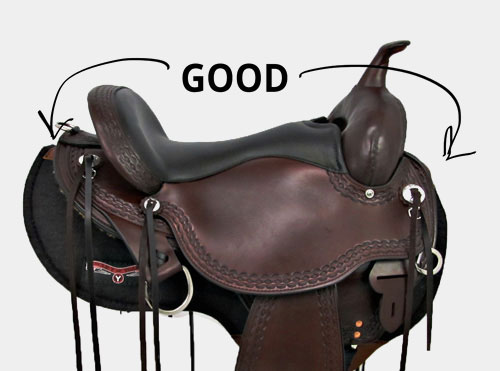
As a general guidline, we've found that it's best to add an additional 2"-3" to the length of your saddle. Any less and you risk sliding over your pad on uneven terrain. Any more and you're forced to deal with an unweildy saddle pad. The photos to the right show a good fitting pad vs an oversized pad. |

 |
By material
Fleece
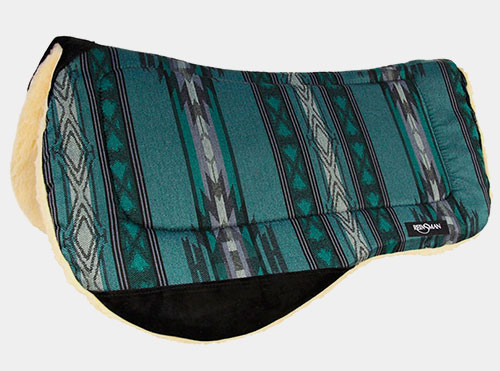
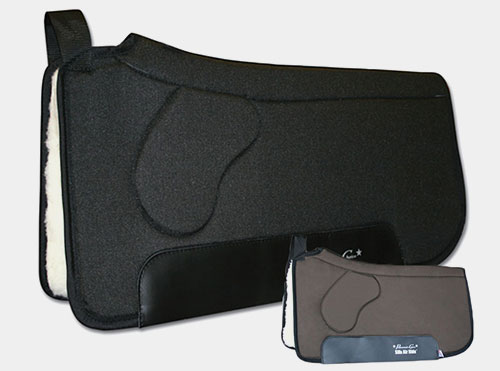
One of the most common saddle pads is the pad made with a fleece bottom. The fleece is often either a synthetic fleece or actual wool or sheep fleece. This is a soft material that is also under many saddles. The wool fleece has a bit more cushion than synthetic fleece but it does not usually have the longevity of synthetic fleece and often becomes matted and compacted quicker.
|
 |
Felt
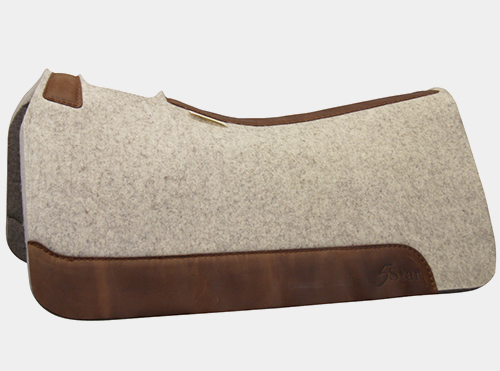
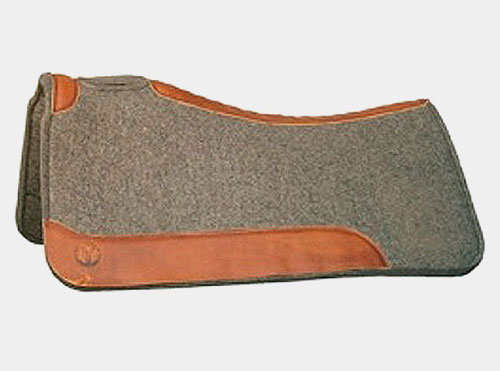
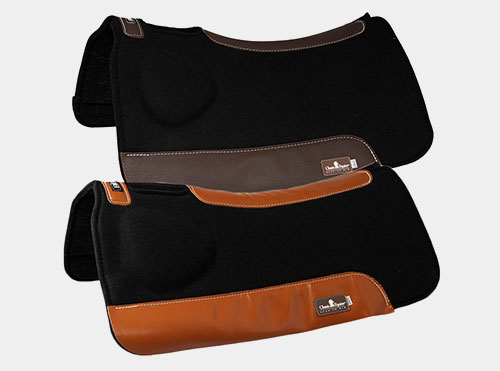
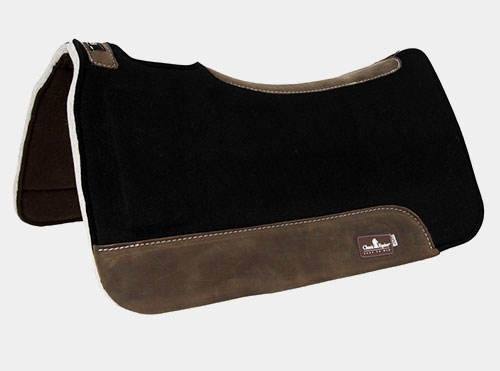
The felt pad is compressed wool that provides many benefits over a standard fleece pad. One of the greatest benefits is the wicker affect the compressed wool has. Felt has the ability to draw sweat from the horse and while doing this; it transfers the heat and dissipates it in the felt.
|
 |
Neoprene or waffle bottom
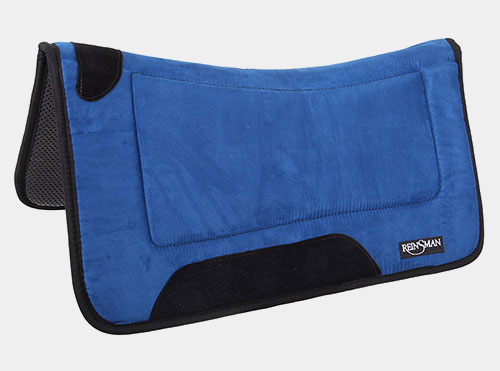
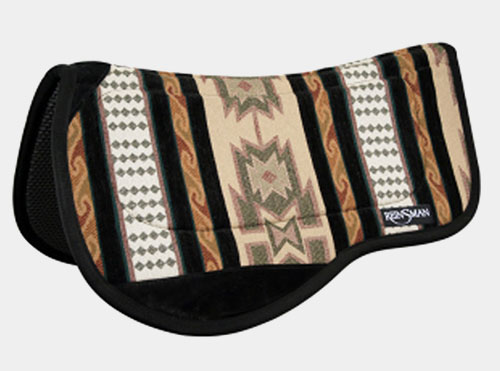
A new type of saddle pad to hit the market is the saddle pad with a neoprene bottom in a waffle type pattern. Neoprene is a type of rubber that is waterproof among other benefits. Neoprene bottom pads are water resistant and are quite easy to maintain and keep new looking.
|
 |
Closed cell foam
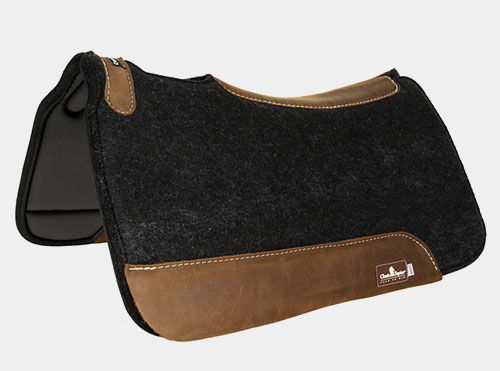
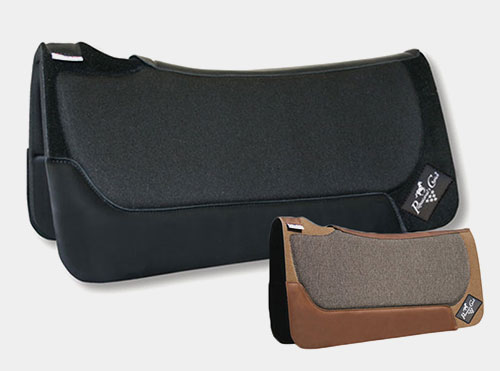
Closed Cell Foam is also a newer technology in saddle pads and often consists of molded foam wrapped in a Nylon cover. The foam allows excellent distribution of weight and provides very good shock distribution.
|
 |
Open cell foam
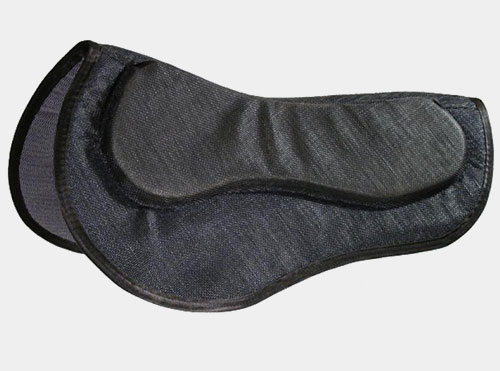
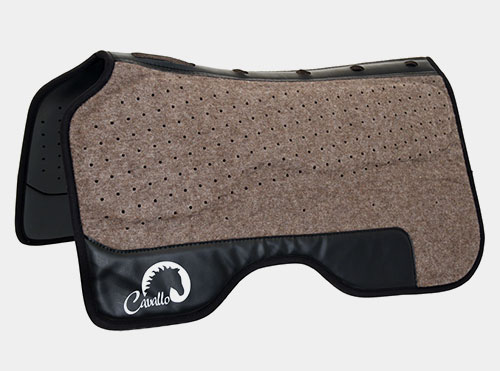
Closed cell foam is denser than open cell foam, allowing it to keep its shape better while still allowing a cushioning effect. The cells are tightly woven together, making it resist absorbing moisture.
|
 |
Inserts
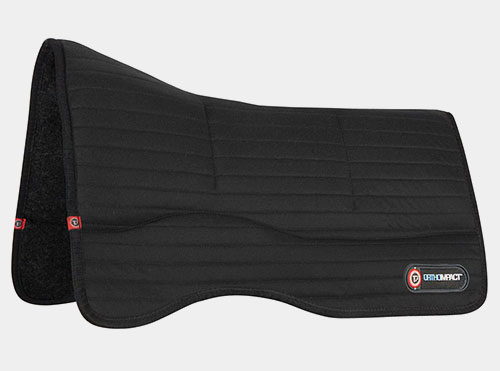
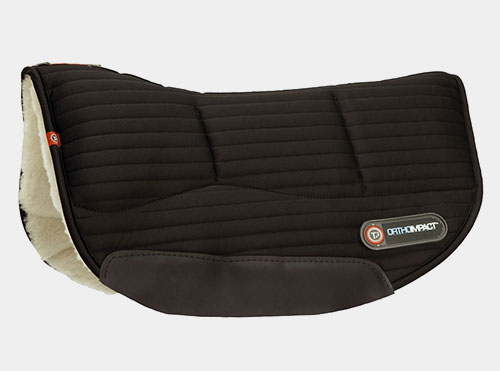
Gel inserts are a gelatin like substance that is a solid but has some characteristics of a liquid. The gel will disburse an impact and then regain its original shape. These are placed where contact between the bars of the saddle and the horse should occur. It is often between layers of the pad.
|
 |
By shape
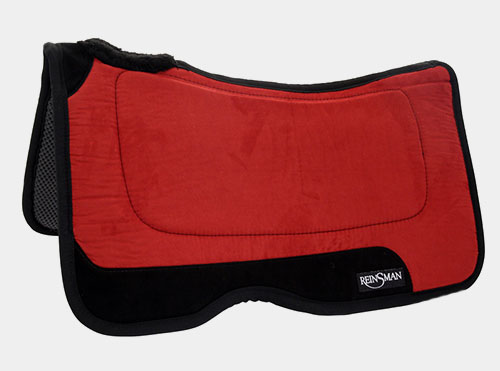
Contour
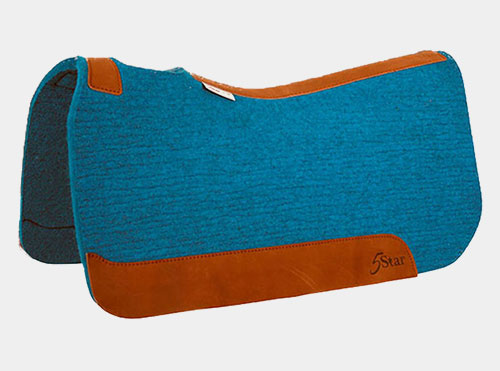
A contour saddle pad is designed for the horse that has the slight dip in their back or those with more prominent withers. The front part of the contour will relieve pressure from the withers. Recommended For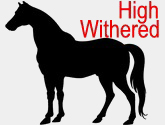 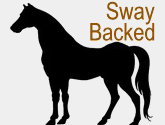 |
 |
Straight
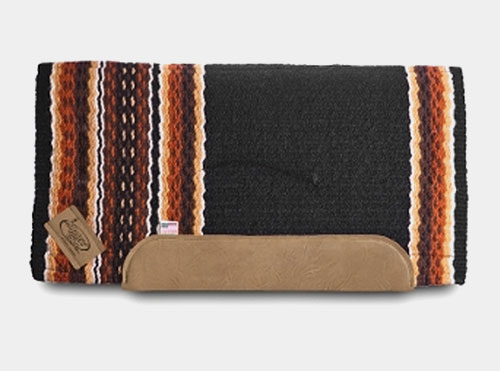
The straight saddle pad is for the round or mutton wither horse or horse with a flat back. The normal or straight saddle pad can be used on horses with normal a normal wither definition. Recommended For  |
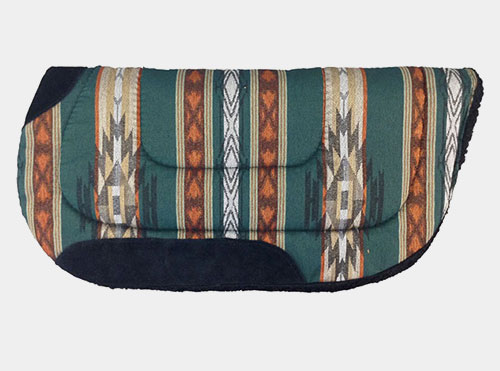 |
Round
The round skirt saddle pad, which is sometimes referred to as a contest saddle pad, is often used on horses with short backs or for saddles that have a round skirt. Recommended For |
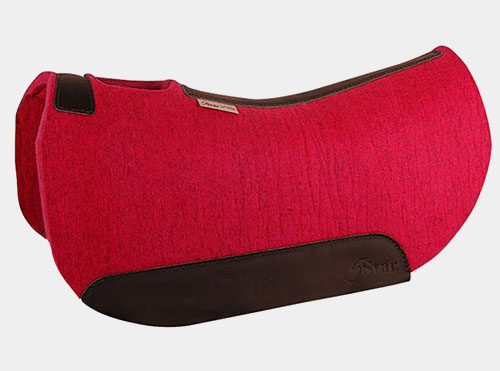
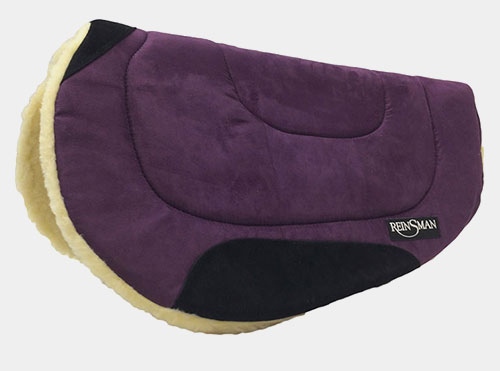 |
Cutout
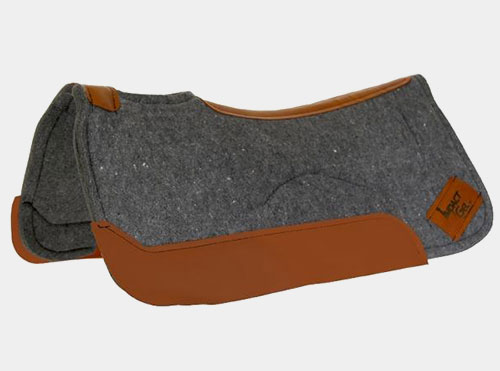
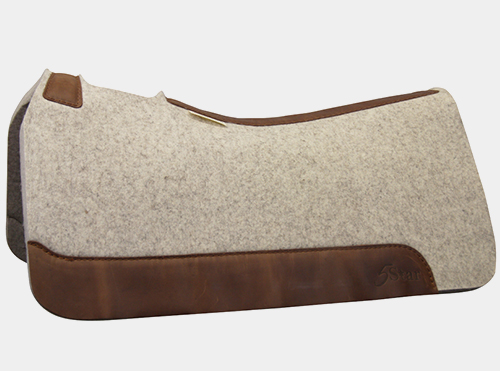
A cutout saddle pad is a pad that is cutout at the top where the horses withers would be. These are helpful in relieving the pressure a pad may have when resting on the withers. Recommended For |
 |
Cutback
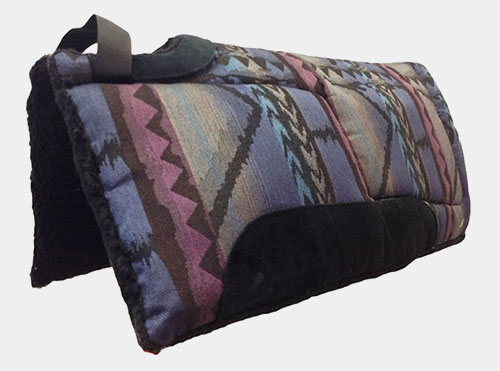
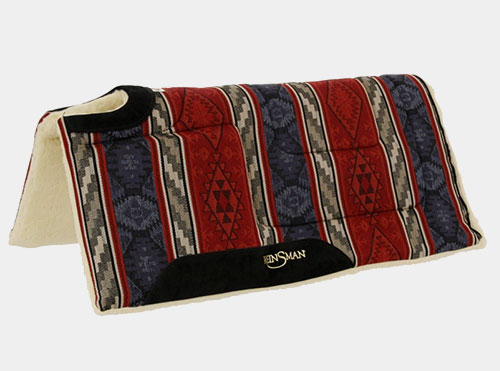
A cut back saddle pad is a pad that actually has a section cut way for the withers to provide relief. There is actually no material on top of the withers with these pads. Great for full wither relief. Recommended For |
 |
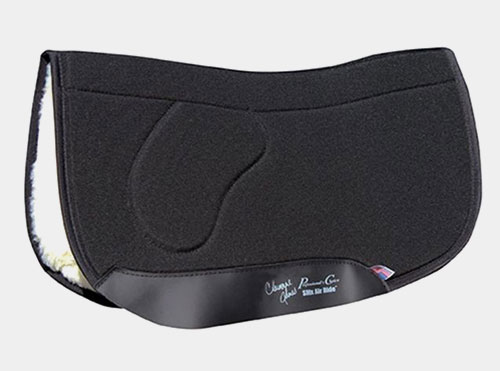
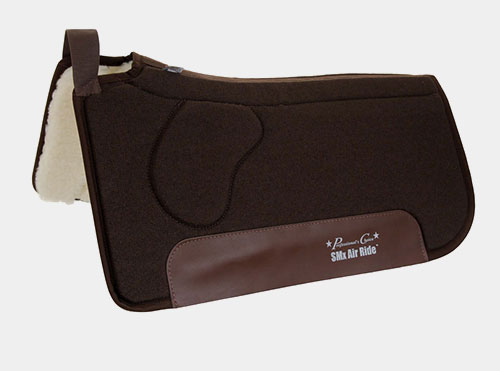
Orthosport
Professional's Choice Orthosport Saddle Pads are specifically designed for strong-shouldered and prominent-withered horses and have a 1/2 inch breathable core, plus a second layer of padding in the dished out areas behind the shoulders and along the spine.
Recommended For |
 |
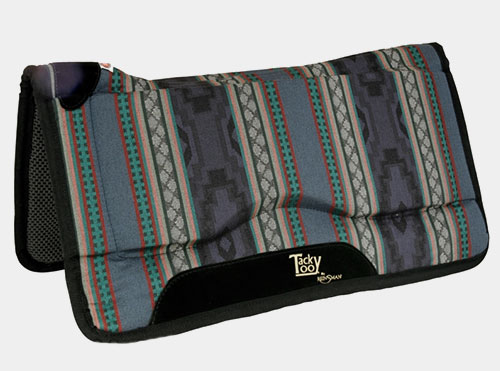
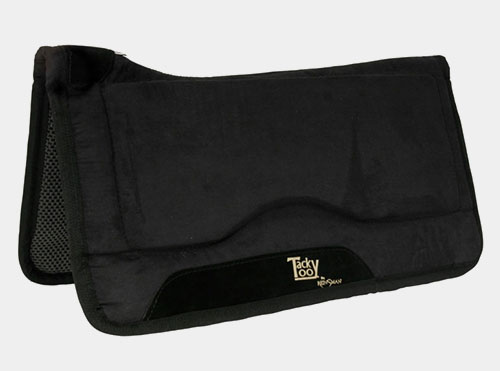
Swayback
A swayback saddle pad is a pad that has a gradual increase in thickness towards the center of the pad. This is for a horse that is considered swayback or a horse with such prominent withers that it creates a dip in the back.
Recommended For |
 |
Built-up
A built up saddle pad is useful for a horse with high or prominent withers. It is built up along the center, raising the saddle up off the withers. Recommended For
|
 |